

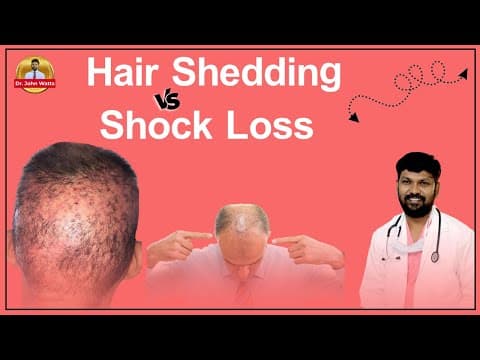
Soon after a hair transplant, many patients notice hair falling out and immediately panic that the procedure has failed. In reality, there are two very different processes at play here, normal hair shedding and shock loss, and Dr John Watts, one of Hyderabad's leading hair transplant surgeons, carefully explains how to tell the two apart.
The Three Phases of Hair Growth
Every strand of hair on the scalp moves through three phases: Anagen, Catagen and Telogen. "This is a universal phenomenon but even in one individual, the hair cycle may be undergoing different phases for each hair," Dr Watts explains.
Anagen is the active growth phase, when hair grows and thickens. It typically lasts 2-8 years, though it averages 2-3 years for most people. Catagen is a short transition phase lasting 2-3 weeks, during which growth stops. Telogen is the resting phase, lasting 2-3 months, after which the hair is pushed out by new Anagen-phase hair growing beneath it, which is what causes normal shedding.
"It is normal to lose 60-100 hair every day through the process of hair shedding. In their place, new hair starts growing. However, the hair cycle of hair is not uniform as each hair may be going through a different phase of its life," says Dr Watts.
Why Hair Sheds After a Transplant
Soon after a hair transplant, hair in both the donor area and the newly implanted area enters the Telogen phase, which causes visible shedding. This is expected and not a sign of failure. "This is because hair growth will soon resume here after the process of hair shedding. One need not worry," Dr Watts reassures patients.
What Is Shock Loss?
Shock loss is different from normal shedding, and in some cases it can be permanent, meaning no new hair grows back in that spot. It can affect both the donor area and the implanted area after a transplant.
What Causes Shock Loss
Dr Watts outlines several reasons shock loss can occur: damage to existing hair during graft implantation, if donor hair is implanted too densely, it can come into contact with and injure existing growing hair in the region; faulty technique by the surgeon, including a graft implantation method that doesn't allow the graft to receive adequate nutrients; and improper magnification during the procedure, which can damage both implanted grafts and existing hair.
Inexperienced surgeons using an oversized punch for harvesting donor grafts is another cause. The punch size should normally be around 0.7mm or 0.8mm; an oversized, misfit punch can cause a poor match in the transplanted region, leading to shock loss. Overharvesting grafts from the donor area can also injure existing hair that is implanted too densely and damage the micro blood vessels in the process.
Choosing the Right Surgeon Matters
Dr Watts stresses that if adequate care isn't taken in choosing a hair transplant surgeon, the risk of these complications rises significantly. Patients should always look for a skilled, experienced expert for the procedure.
If someone has already experienced shock hair loss after a transplant, Dr Watts advises speaking to their hair transplant expert about alternative regrowth options such as PRP or other techniques.
Understanding the Bigger Picture
Recognising the difference between the two processes matters because the response to each is different. Ordinary shedding needs patience, since new hair growth follows naturally once the Telogen phase ends. Shock loss, especially when caused by surgical error, may need an entirely different plan for regrowth, which is why identifying the correct cause with your surgeon, rather than assuming the worst, is the first step before deciding what to do next.
This article is for educational purposes only and is not a substitute for professional medical advice. Consult a qualified dermatologist for diagnosis and treatment.
Instant Appointment Slot Booking
Frequently asked questions
What's the difference between hair shedding and shock loss after a transplant?
Hair shedding is a normal, temporary part of the hair growth cycle where hair enters the resting (Telogen) phase and is later replaced by new growth. Shock loss can be permanent and is usually caused by damage during the procedure.
How much hair is normal to shed each day?
Dr Watts says losing 60-100 hairs a day through the natural shedding process is normal, since not all hair follicles are in the same growth phase at once.
What causes shock loss after a hair transplant?
Common causes include overly dense graft implantation, faulty surgical technique, improper magnification, oversized graft punches, and overharvesting of donor hair.
Can hair grow back after shock loss?
Sometimes shock loss is permanent, but patients affected by it should consult their hair transplant expert about regrowth options such as PRP therapy.
How long does the resting (Telogen) phase of hair last?
Telogen typically lasts 2-3 months before new Anagen-phase hair pushes the resting hair out, causing normal shedding.