
A hair transplant restores hair to areas that have lost it — but what about the hair that was never transplanted? A real patient case documented on Dr. John Watts’ YouTube channel illustrates a principle that many transplant patients overlook.
Vijay's surprising result
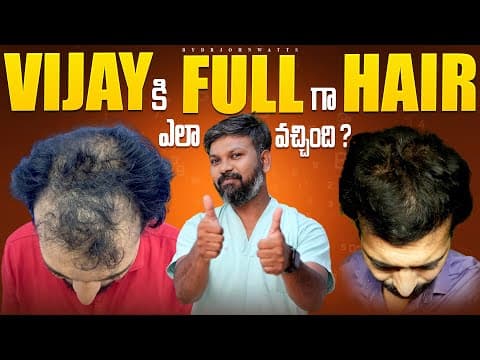
Vijay, a patient at Trichos in Hyderabad, documented his hair restoration journey daily on Dr. John Watts’ channel for over four months. He had a hair transplant performed only on the front portion of his scalp.
On day 124, a viewer named Rama Krishna noticed something unexpected: Vijay’s entire scalp — including the back — looked dense and full, even though only the front had received transplanted hair. Curious, he asked Dr. Watts to explain.
The role of post-transplant medication
Dr. Watts’ answer was straightforward. Vijay was taking hair medication alongside his transplant — and that made all the difference.
“A hair transplant gives you new hair, but taking the right hair medication can help sustain, strengthen and improve the density of the non-transplanted hair,” Dr. Watts explained.
Existing hair strands that have not been transplanted respond to medication. Though these strands may not grow significantly longer, they help create the appearance of thicker and fuller hair, enhancing the overall results.
Why this matters for transplant outcomes
The surgical result and the medicated result work together. Without medication, the existing hair on the rest of the scalp continues to miniaturise and thin — leaving a mismatch between the dense transplanted zone and the thinning non-transplanted zones.
With medication, the existing hair stabilises and thickens, creating a more uniform, natural-looking overall density. This was the secret behind Vijay’s impressive 124-day result.
“The best results come from a combination of surgical intervention and proper post-transplant care,” Dr. Watts summarised.
This article is for educational purposes only and is not a substitute for professional medical advice. Consult a qualified dermatologist for diagnosis and treatment.
Instant Appointment Slot Booking
Frequently asked questions
Does a hair transplant also improve hair in non-transplanted areas?
Not directly. But post-transplant medication can strengthen and thicken existing hair in non-transplanted areas, as seen in Vijay's case.
Why does existing hair look better after a hair transplant with medication?
Medication sustains and strengthens the non-transplanted hair, improving overall density and creating a more uniform, natural look.
Is medication necessary after a hair transplant?
Dr. Watts strongly recommends it. Medication prevents existing hair from continuing to thin due to androgenetic alopecia, which would otherwise undermine the transplant results.