

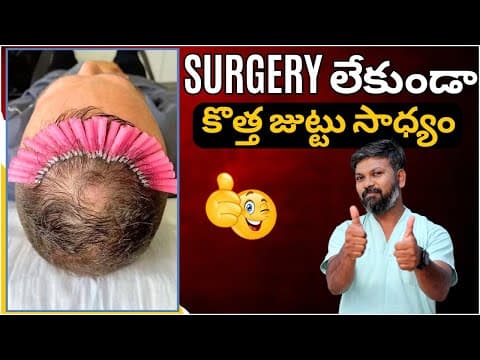
Hair restoration has come a long way, with new techniques continually emerging. One of the most promising alternatives to a traditional hair transplant is the use of PDO threads — a less invasive approach to stimulating hair growth without the complexities of surgery.
In this article based on his educational video, Dr. John Watts — dermatologist, trichologist and hair transplant surgeon in Hyderabad — explains what PDO threads are, how they work, who qualifies, and what side effects to expect.
What are PDO threads?
PDO stands for Polydioxanone, a synthetic material commonly used in medical sutures. In hair restoration, PDO threads are inserted into the scalp using a fine needle, where they stay for 4-6 months. As they gradually dissolve, they encourage collagen production and angiogenesis — the formation of new blood vessels.
This improved blood supply supports the hair follicles and creates a healthier scalp environment, which can lead to the stimulation of hair growth and the development of new baby hairs. Importantly, the procedure must be performed by a qualified dermatologist to minimize risks such as infection or improper technique.
From facelifts to hair restoration
PDO threading was initially used as a non-surgical facelift technique, targeting sagging skin by stimulating collagen production and tightening the skin. Researchers later discovered the same principle could be applied to the scalp: when PDO threads are placed under the scalp skin, they trigger the body's natural healing response.
As the threads dissolve over several months, the scalp experiences increased collagen production and new blood vessel growth, with new hair follicles beginning to form in the treated areas. The results are subtle but promising.
Who qualifies for PDO threads?
PDO threads can be a viable option for people who are reluctant to undergo hair transplant surgery, or who have not had success with topical treatments like Minoxidil or oral medications like Finasteride. The procedure suits those with mild to moderate hair thinning looking for a non-surgical way to promote regrowth.
Ideal candidates are in good overall health without a history of immune-compromised conditions. People in an immunocompromised situation, such as those with diabetes, should avoid the PDO thread technique as healing can be delayed. A consultation with a qualified professional is essential to determine suitability.
Side effects and realistic expectations
Like any cosmetic procedure, PDO threading carries some risks. Common side effects include redness, mild swelling and localized pain at the injection sites, with possible temporary discomfort during or after treatment. In rare cases there is an increased risk of infection — especially if the procedure is done by an unqualified practitioner.
PDO threads are not a magic solution for severe hair loss. Studies show promising results, especially for promoting baby hair growth and improving scalp health, but results are gradual and take several months to become noticeable.
The bottom line
PDO threads offer a genuinely less invasive option for mild to moderate hair thinning — particularly for people who cannot or will not pursue surgery or have not responded to Minoxidil or Finasteride. But they demand realistic expectations, a qualified dermatologist, and patience measured in months, not weeks.
This article is for educational purposes only and is not a substitute for professional medical advice. Consult a qualified dermatologist for diagnosis and treatment.
Instant Appointment Slot Booking
Frequently asked questions
What are PDO threads and how do they help hair growth?
PDO (Polydioxanone) threads are dissolvable medical sutures inserted into the scalp with a fine needle. Over 4-6 months they dissolve, stimulating collagen production and new blood vessel formation, which supports hair follicles and can promote new baby hair growth.
Who is a good candidate for PDO thread hair treatment?
People with mild to moderate hair thinning who are reluctant to have transplant surgery or have not responded to Minoxidil or Finasteride, and who are in good overall health. Immunocompromised individuals, such as those with diabetes, should avoid it due to delayed healing.
What are the side effects of PDO threading?
Common side effects include redness, mild swelling and localized pain at the injection sites. Rarely, infection can occur — especially if performed by an unqualified practitioner.
How soon do PDO thread results appear?
Results are gradual, taking several months to show noticeable improvement. PDO threads are not a magic fix for severe hair loss.