
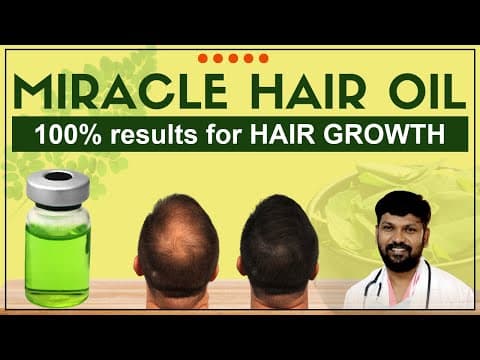
Do Moringa leaves do any good for controlling hair loss? Are they really as good for hair growth and baldness control as is being touted?
In this article based on his educational video, Dr. John Watts — noted dermatologist, trichologist and one of the best hair transplant surgeons — explores what Moringa leaves and Moringa oil can genuinely offer your hair.
A genuine nutrient powerhouse
Moringa leaves come with several benefits known to boost hair growth and prevent hair fall. "It has both anti-ageing and anti-oxidant properties that are hair-friendly," says Dr. John Watts.
The numbers are striking: nutrient-rich Moringa is enriched with essential amino acids and contains 7 times more vitamin C than oranges, 4 times more calcium than milk and 4 times more beta carotene than carrots.
Endowed with vitamins A and B, Moringa is known to make hair cells stronger and support the hair growth cycle. "It is a rich source of vitamin C that helps in not only countering the damaging effect of free radicals but also repairing the damage," said Dr. Watts. It is also a good source of iron, which helps carry more oxygen to the hair, and zinc, which promotes hair growth and controls hair loss.
What Moringa oil does for the scalp
Moringa oil, derived from the plant and leaves, contains zinc, silica, vitamin A and antioxidants. "The oil keeps the hair shiny and conditioned," said Dr. John Watts, adding that the zinc, silica and vitamin A prevent clogging of the sebaceous gland and help in the continued production of sebum.
Vitamin A deficiency can make the scalp dry, but regular massage with Moringa oil can prevent this. "Moringa oil can keep the scalp tissue soft," he informed, adding that its vitamin B, C, E and iron content also helps maintain blood circulation to the hair roots. Regular use also helps keep dandruff away, control split ends and keep the scalp smooth.
How to use Moringa oil
The best way is to massage the scalp with Moringa oil regularly, twice or thrice a week. "Once the massaging is done, one can tie a towel or a cloth on one's scalp for an hour and then rinse it with shampoo. It will ensure the scalp absorbs the oil," informed Dr. John Watts.
What Moringa cannot do
Dr. Watts is clear about the limit: Moringa oil cannot help you regain hair at bald spots. "The only solution for baldness is a hair transplant," he said.
The bottom line
Moringa is a legitimately nutrient-dense ally for hair health — supporting stronger hair, a healthier scalp, better circulation and dandruff control. But like every oil and supplement, it works on existing hair, not on bald areas. If baldness is your concern, a hair transplant is the only solution.
This article is for educational purposes only and is not a substitute for professional medical advice. Consult a qualified dermatologist for diagnosis and treatment.
Instant Appointment Slot Booking
Frequently asked questions
What nutrients make Moringa good for hair?
Moringa contains essential amino acids, 7 times more vitamin C than oranges, 4 times more calcium than milk, 4 times more beta carotene than carrots, plus vitamins A and B, iron and zinc.
How often should I use Moringa oil on my scalp?
Massage the scalp with Moringa oil twice or thrice a week, then tie a towel on the scalp for an hour and rinse with shampoo so the oil is absorbed.
Does Moringa oil help with dandruff?
Yes. Regular use of Moringa oil helps keep dandruff away, prevents dry scalp, controls split ends and keeps the scalp smooth.
Can Moringa regrow hair on bald spots?
No. According to Dr. John Watts, Moringa oil cannot regrow hair at bald spots — the only solution for baldness is a hair transplant.