

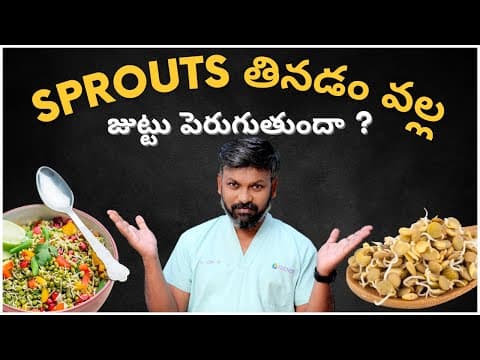
Nutrition myths and post-transplant worries are among the most common questions Dr John Watts receives. In this roundup, he explains whether milk and sprouts genuinely help with hair growth, and addresses a patient's concern about hair turning grey after a transplant.
Does Milk Help With Hair Loss?
A 10th standard student asked whether milk is good for controlling hair loss, as he had heard this from multiple sources. Dr Watts confirms that milk contains essential calcium and protein, both of which are considered good for hair growth and hair fall control. But there's a catch.
"Repeated heating or overheating of milk may destroy its essential nutrients. The protein may get denatured as a result. If you use such milk, then you won't get the desired results," he explains. In other words, how the milk is prepared matters as much as drinking it in the first place.
Can Sprouts Improve Hair Growth?
Another viewer, who had neglected his nutrition for four years and noticed hair loss as a result, asked whether recently adding sprouts to his diet would help. Dr Watts confirms that the nutritional properties of sprouts support hair growth. "It is a good move that you have decided to replenish your lost nutrients as they will help in hair regrowth. New hair will also grow as a result," he says.
However, he adds an important caveat: nutrition alone can't override genetics. If there's a family history of baldness, hair loss may still begin at the top and crown of the scalp, even with a good diet. "The hair on your sides and back may remain unaffected in the event of triggering of family/genetic baldness. You must consult your dermatologist in the event you notice such changes," he explains.
Can a Hair Transplant Cause Grey Hair?
A 22-year-old patient who underwent a hair transplant with 3,000 grafts noticed part of his hair turning grey or white afterward, and was worried the procedure had caused it. Dr Watts first notes that using 3,000 grafts at age 22 is unusual unless the baldness was already severe. More importantly, he clarifies that the hair transplant procedure itself has no connection to grey hair.
"If your hair has turned white or grey, there is no reason to blame your hair transplant as they are not connected," he says. He offers two possible explanations instead.
First, using an excessive number of donor grafts from the back of the scalp can cause thinning at the donor site, which makes grey hairs that were already there, but previously hidden among denser hair, more visible. Second, an oxidation problem linked to low antioxidant intake could be triggering new grey hair.
"You may be deficient in intake of anti-oxidants and that deficiency might be triggering the grey hair on your scalp. If you start medication then you can put an end to the emergence of new grey hair," Dr Watts says, adding that the patient should focus on and enjoy his healthy transplanted hair instead of worrying.
Diet Helps, But It Isn't the Whole Story
Both the milk and sprouts questions show that nutrition genuinely supports hair health, but as the grey hair case demonstrates, not every hair change has a dietary explanation. Genetics, antioxidant levels and even the mechanics of a transplant procedure can all play a role, which is why Dr Watts consistently recommends a dermatologist's opinion whenever something changes unexpectedly.
For anyone trying to support their hair through diet, the practical takeaway is straightforward: good nutrition, whether from milk or sprouts, helps the hair you already have, but it works alongside genetics and overall health rather than in place of them. When something changes suddenly, whether it's new hair fall or unexpected grey hair, that's the moment to bring in a dermatologist rather than trying to explain it away with diet alone.
This article is for educational purposes only and is not a substitute for professional medical advice. Consult a qualified dermatologist for diagnosis and treatment.
Instant Appointment Slot Booking
Frequently asked questions
Does drinking milk help control hair loss?
Milk contains calcium and protein that support hair growth, but overheating it repeatedly can denature the protein and destroy these nutrients, reducing the benefit.
Do sprouts help with hair regrowth?
Yes, the nutritional value of sprouts supports hair growth and can help replenish nutrients lost through poor diet, according to Dr Watts.
Can improving nutrition prevent genetic baldness?
No. Nutrition can support existing hair, but if there is a family history of baldness, genetic hair loss at the crown and top of the scalp can still occur regardless of diet.
Does a hair transplant cause grey hair?
No, Dr Watts confirms there's no connection between the transplant procedure and grey hair. Visible grey hair afterward is more likely due to thinning at the donor site or low antioxidant levels.