

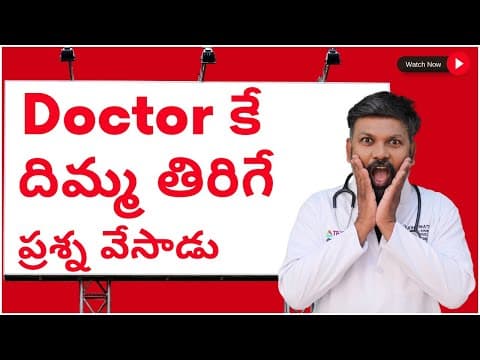
Hair transplant science can seem puzzling — if hair does not grow in the bald area, how can transplanted hair survive there? It is one of the most logical questions patients ask. Dr. John Watts — dermatologist, trichologist and hair transplant surgeon in Hyderabad with over 2,000 successful procedures — explains the science behind donor hair survival and follicular units.
Why does donor hair survive where original hair did not?
“You need to understand what is Dihydrotestosterone (DHT) dependent hair. They are genetic triggers for baldness that we usually see on the front, top and crown of the scalp. This results in genetic baldness,” explained Dr. John Watts.
The hair on the back of the scalp, body hair, and beard hair are non-DHT dependent. “When these hairs are transplanted on the recipient site, they grow healthily as they are independent of the DHT hormone effect,” he said. The bald area is not incapable of supporting hair — it simply lacks DHT-resistant grafts.
Will the donor site look bald after extraction?
“We randomly extract the hair in such a way that it is not noticeable. Even minor gaps that are formed are easily covered by the adjoining growing hair with the result that even if you go for a crew cut, it is not noticeable,” Dr. Watts explained.
Can a follicular unit be split for more coverage?
“Each follicular unit is like a family and may have closely connected hair strands. Sometimes, there are two or three or more than three hair strands in each follicular unit,” he explained. “If we try to separate the hair strands in a follicular unit, it may get destroyed and no graft may survive. We have to transplant it on the recipient region as one complete follicular unit,” Dr. Watts informed.
This article is for educational purposes only and is not a substitute for professional medical advice. Consult a qualified dermatologist for diagnosis and treatment.
Instant Appointment Slot Booking
Frequently asked questions
Why does transplanted hair grow in areas where hair couldn't grow before?
Because donor hair from the back of the scalp is non-DHT dependent. It does not respond to the hormone that causes genetic baldness, so it continues to grow healthily even in the recipient bald area.
Will my donor area look thin or bald after a hair transplant?
No. Dr. John Watts explains that grafts are extracted randomly and in a dispersed pattern. The gaps are covered by surrounding hair, making it undetectable even with a crew cut.
Can follicular units be split to transplant each hair strand separately for more coverage?
No. Dr. Watts explains that splitting a follicular unit destroys it. Each unit must be transplanted intact to survive and grow.