
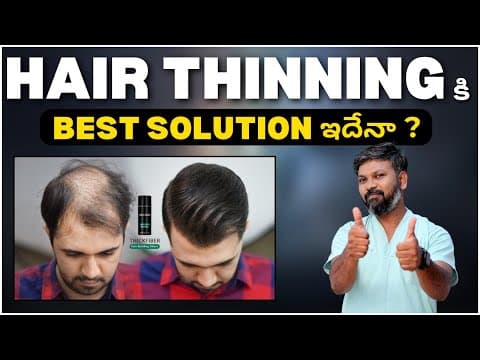
Hair fibres have become a popular quick fix for thinning hair, promising instantly thicker-looking strands without any downtime. But do they actually address hair thinning, or are they just a cosmetic trick? Dr John Watts, a Hyderabad-based dermatologist, trichologist and hair transplant surgeon, breaks down how hair fibres work and where their limits lie.
What Are Hair Fibres, Exactly?
Hair fibres are tiny strands designed to closely mimic the look and feel of natural hair, blending with existing strands to create the illusion of thicker, fuller hair. They are made from keratin protein -- the same material found in human hair -- which makes them both durable and flexible.
Dr Watts explained that hair fibres are especially useful for concealing small bald patches, particularly on the crown or other areas where thinning is noticeable. While they appear as a fine powder to the naked eye, under a microscope they resemble hair-like filaments, which is how they create the appearance of artificial hair density.
Do Hair Fibres Treat Hair Thinning?
This was the core of a viewer, Saurav KP's, question -- and Dr Watts was direct about the answer. Hair fibres can effectively mask hair thinning, but they are not a treatment for the underlying condition causing it. They offer a temporary solution through masking and camouflage, not a cure.
"Hair fibres do not stimulate natural hair growth or increase hair density; rather, they create the optical illusion of thicker hair," Dr Watts explained. The fibres work through an electrostatic charge that allows them to cling to existing hair strands, blending in and providing instant volume and coverage.
The Limitations of Hair Fibres
Despite being effective at concealing thinning areas, Dr Watts pointed out an important limitation: hair fibres need existing hair to adhere to, and cannot cover completely bald areas. This means they work well for someone with diffuse thinning, but not for someone with a fully bald patch.
What to Do for More Extensive Hair Loss
For people with more extensive hair loss, Dr Watts advised exploring other options, such as hair transplant surgery, to restore actual hair density rather than relying on a cosmetic workaround. He recommended consulting a hair transplant surgeon to determine whether a transplant is feasible, based on how much donor hair is available.
Ultimately, Dr Watts's view is that hair fibres are a convenient short-term fix for masking thinning hair, but anyone concerned about ongoing hair loss should still look into long-term treatment options for the underlying cause.
For anyone comparing hair fibres with other cosmetic options like scalp micro-pigmentation or a hair patch, the key question remains the same: is the goal to look better today, or to actually treat what is causing the hair to thin in the first place.
This distinction is worth remembering when comparing hair fibres to other cosmetic solutions, such as scalp micro-pigmentation or a hair patch. All of these approaches change how thinning hair looks without changing why it is thinning in the first place.
For patients further along in their hair loss journey, this two-track approach -- addressing appearance in the short term while investigating the underlying cause -- tends to produce the most satisfying long-term outcome, according to Dr Watts.
This article is for educational purposes only and is not a substitute for professional medical advice. Consult a qualified dermatologist for diagnosis and treatment.
Instant Appointment Slot Booking
Frequently asked questions
What are hair fibres made of?
They are made from keratin protein, the same material found in human hair, which makes them durable and flexible.
Do hair fibres treat hair thinning or hair loss?
No, they only mask the appearance of thinning hair by clinging to existing strands through an electrostatic charge -- they don't stimulate hair growth or increase actual hair density.
Can hair fibres cover a completely bald patch?
No, hair fibres need existing hair to adhere to, so they cannot effectively cover fully bald areas.
What should someone with extensive hair loss consider instead of hair fibres?
Dr Watts recommends consulting a hair transplant surgeon to check if a hair transplant is feasible based on available donor hair.